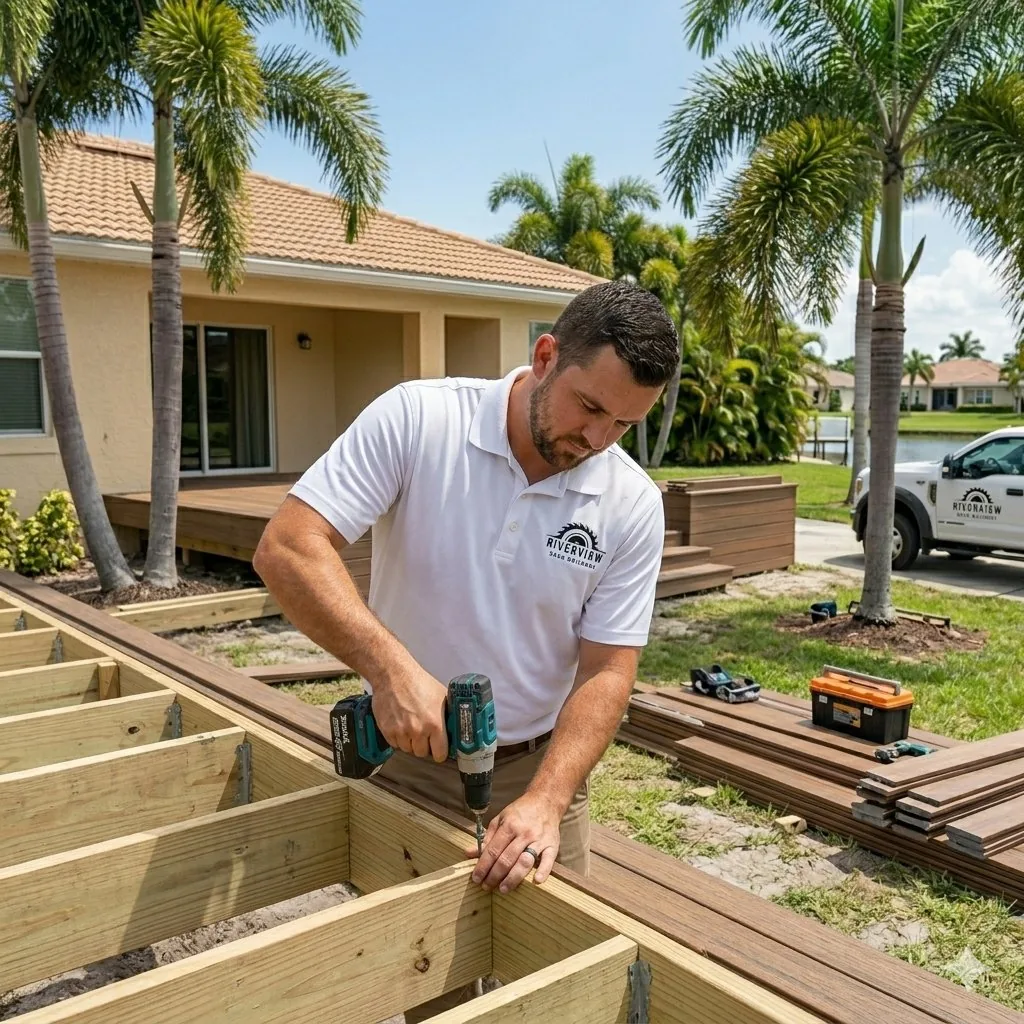
In Florida, building a deck that looks good is the easy part. Building one that stays attached to your house when a hurricane comes through is what separates a professional contractor from a weekend handyman. Hurricane-resistant construction is not an upgrade in our area — it is the baseline. Here is what actually goes into a deck engineered to survive Riverview storm season.
Why It Matters Here
Riverview sits in one of the most hurricane-exposed regions in the country. High winds do not just push on a deck — they can lift it, twist it, and tear poorly anchored structures away from the house entirely. A deck that is not built to code becomes a liability and a danger during a storm, both to your home and to your neighbors' property. That is why Florida Building Code sets strict wind-load requirements, and why every deck we build is engineered to meet them.
It Starts Underground: Footings
A hurricane-resistant deck begins with proper footings. The posts that hold up your deck have to be anchored into footings that are deep and substantial enough to resist both downward load and uplift — the upward force wind generates. In Florida's sandy and sometimes soft soils, footing depth and diameter are calculated to code, and near the water we often use helical or marine-rated footings for extra holding power. Skimp here and the rest of the structure is compromised no matter how well it is built above ground.
The Connections Are Everything
Wind damage almost always happens at the connections — where post meets footing, where beam meets post, where the deck meets the house. A hurricane-resistant deck uses engineered metal connectors and hurricane ties at every critical junction, not just nails. The ledger board that attaches the deck to your home is bolted and flashed properly so water cannot get behind it and so it cannot pull away under load.
- Post-to-footing: Anchored with rated hardware designed to resist uplift.
- Beam-to-post: Secured with metal connectors, not toenailed.
- Joist-to-beam: Tied with hurricane clips at each connection.
- Ledger-to-house: Through-bolted and flashed to shed water and resist pull-away.
Fasteners That Survive the Climate
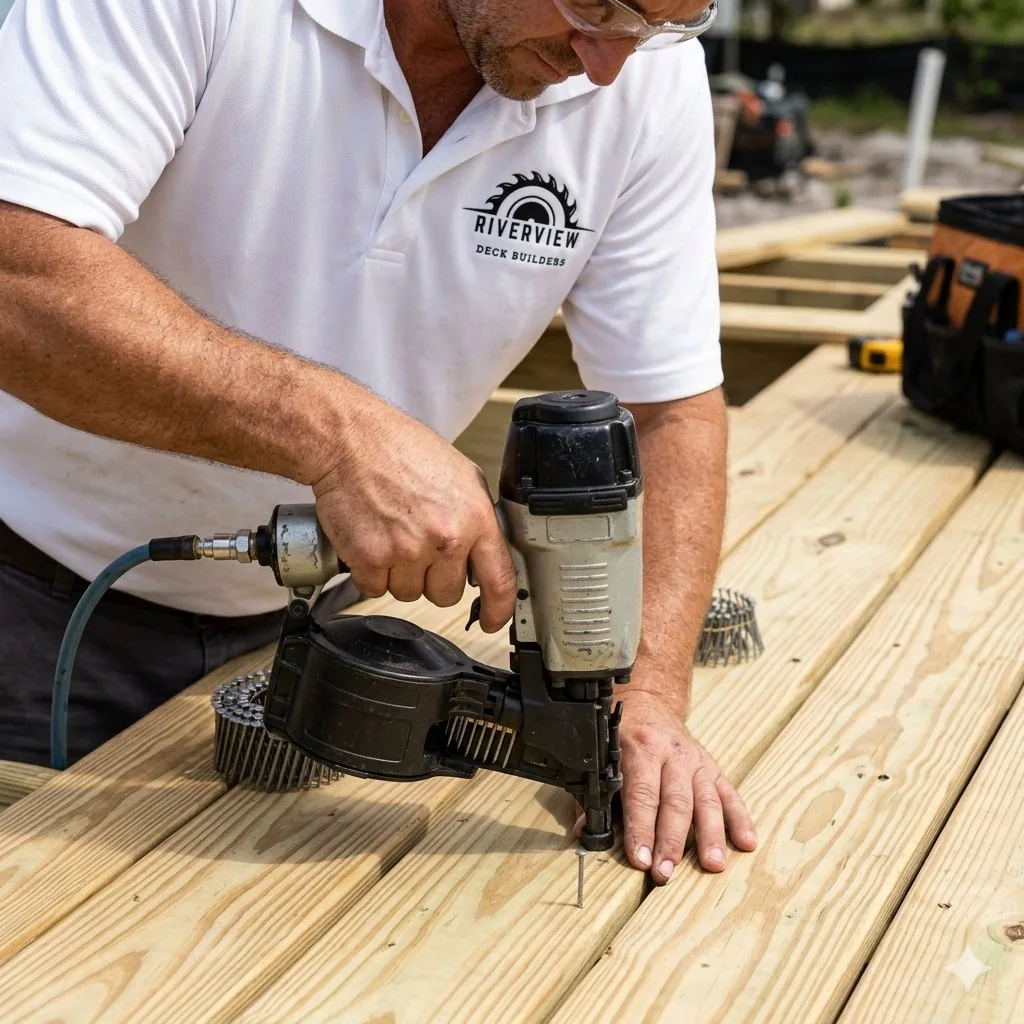
Hurricane resistance and corrosion resistance go hand in hand in Florida. A connection is only as strong as the fastener holding it, and ordinary fasteners rust in our humid, salt-touched air — weakening the structure exactly where it needs to be strongest. We use stainless steel and hot-dipped galvanized fasteners throughout, so the connections that keep your deck anchored do not quietly corrode away over the years.
Railings Built to Code
Guardrails are a major safety element and a frequent failure point in cheap construction. Code dictates how tall railings must be, how far apart balusters can be spaced, and how much force a railing must withstand. We build railings that meet those load requirements so they hold firm — during normal use and during a storm. This is especially important on elevated decks where a railing failure could be catastrophic.
Material Choices That Help
While the structure does the heavy lifting, material choice plays a supporting role. Capped composite and PVC decking will not rot or weaken from the moisture a storm drives into every surface, which helps the deck maintain its integrity over time. Pairing durable surface materials with an engineered frame gives you a deck that is resilient through and through. We cover surface options in our guide to the best decking materials for Florida's climate.
Permits Prove It Was Done Right
The permit and inspection process exists in large part to verify hurricane-resistant construction. When the county inspects your footings and final structure, they are confirming the deck meets wind-load code. That inspection record also matters for insurance. We pull permits and manage inspections on every build — you can read how that works in our overview of deck permits in Hillsborough County.
Don't Cut Corners on Safety
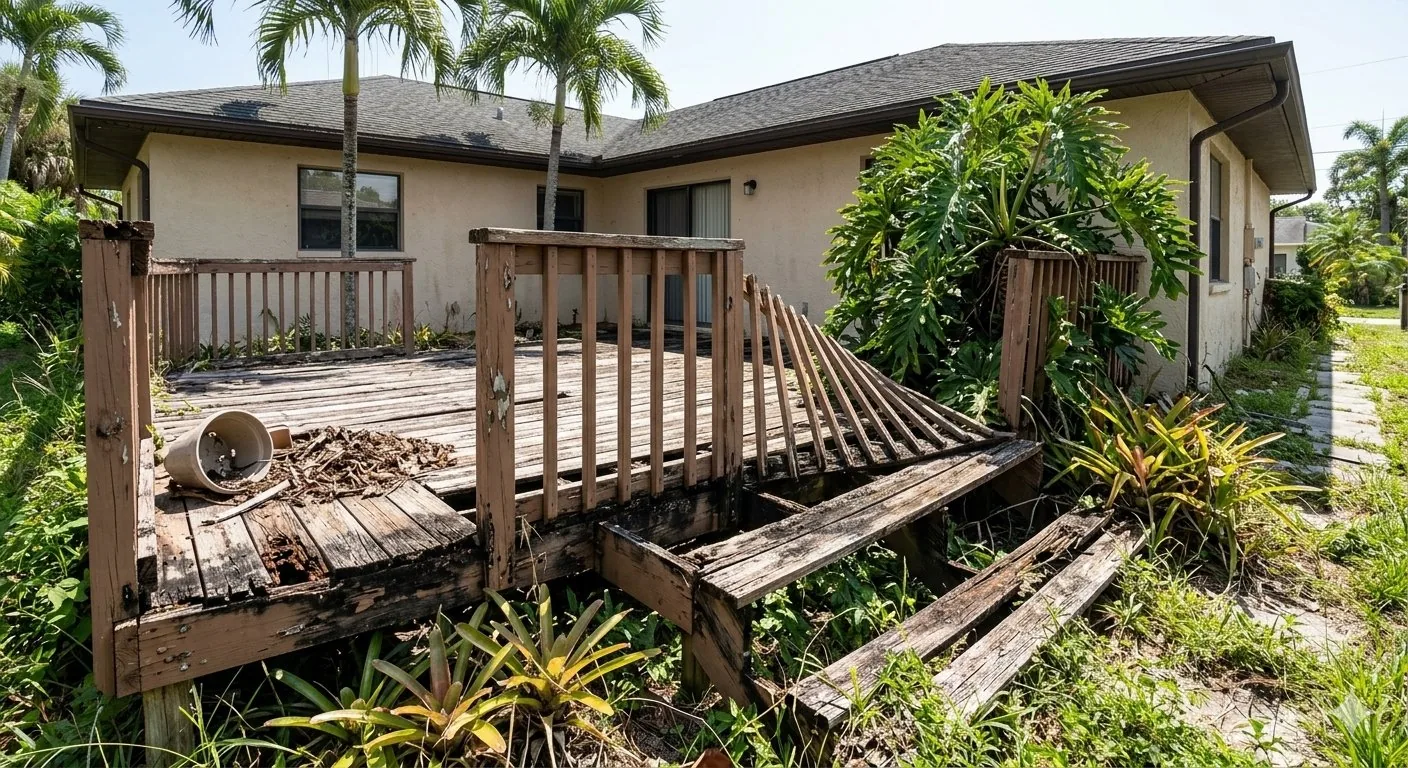
Here is the hard truth: the difference between a hurricane-resistant deck and a vulnerable one is often invisible once the deck is finished. Both can look beautiful on day one. The difference is underground in the footings, inside the connections, and in the quality of the fasteners — exactly the places an inexperienced or budget-driven builder is tempted to cut corners. Those corners do not show up until the wind tests them.
Maintenance That Protects Storm Readiness
Hurricane resistance is not entirely set in stone the day the deck is finished — it needs a little upkeep to stay strong. Before each storm season, it is worth inspecting your deck for loose fasteners, wobbly railings, and any signs of corrosion or rot at the connections. Catching a loosened bolt or a rusting connector early keeps a small fix from becoming a structural weak point when the wind arrives. Securing or removing loose furniture, planters, and grills before a storm also matters, since flying objects can damage even a well-built deck. We cover the warning signs to watch for in our guide to when a deck needs repair or replacement.
Hurricane-Resistant Decks and Your Insurance
There is a financial upside to building strong. A permitted, code-compliant deck is documented proof that the structure was built to current wind-load standards — exactly the kind of record that matters when you file a claim after a storm or when an insurer evaluates your property. An unpermitted, under-built deck can complicate claims and even affect coverage. Building to code is not just about surviving the storm physically; it protects you financially afterward, too. That documentation trail is one more reason we pull permits and pass inspections on every single project.
Build It Right the First Time
Every deck we build across Hillsborough County is engineered to Florida Building Code wind-load standards, with proper footings, rated connections, corrosion-resistant fasteners, and code-compliant railings. We never treat hurricane resistance as optional, because in Riverview Bay it never is. If you want a deck that is as strong as it is beautiful, request a free quote and we will show you exactly how we build for the storms.