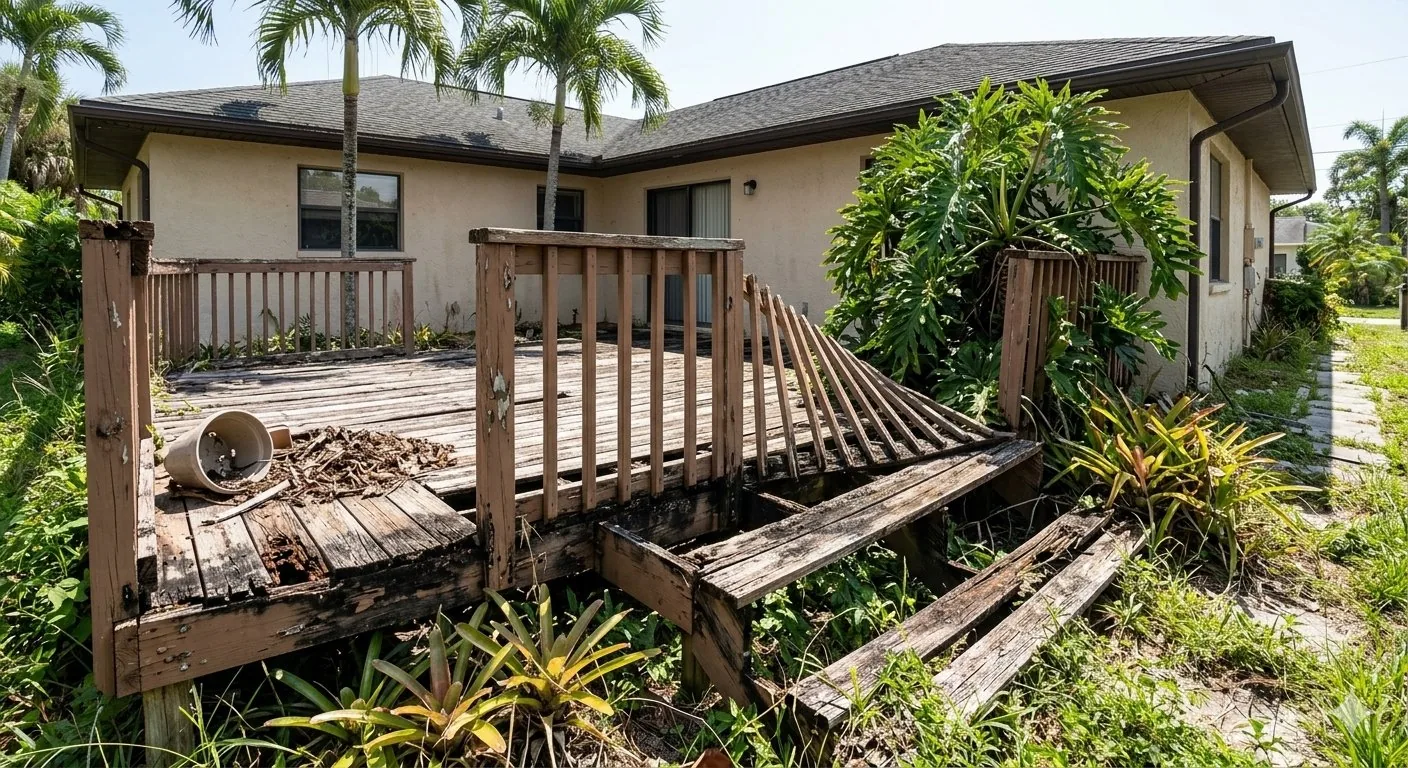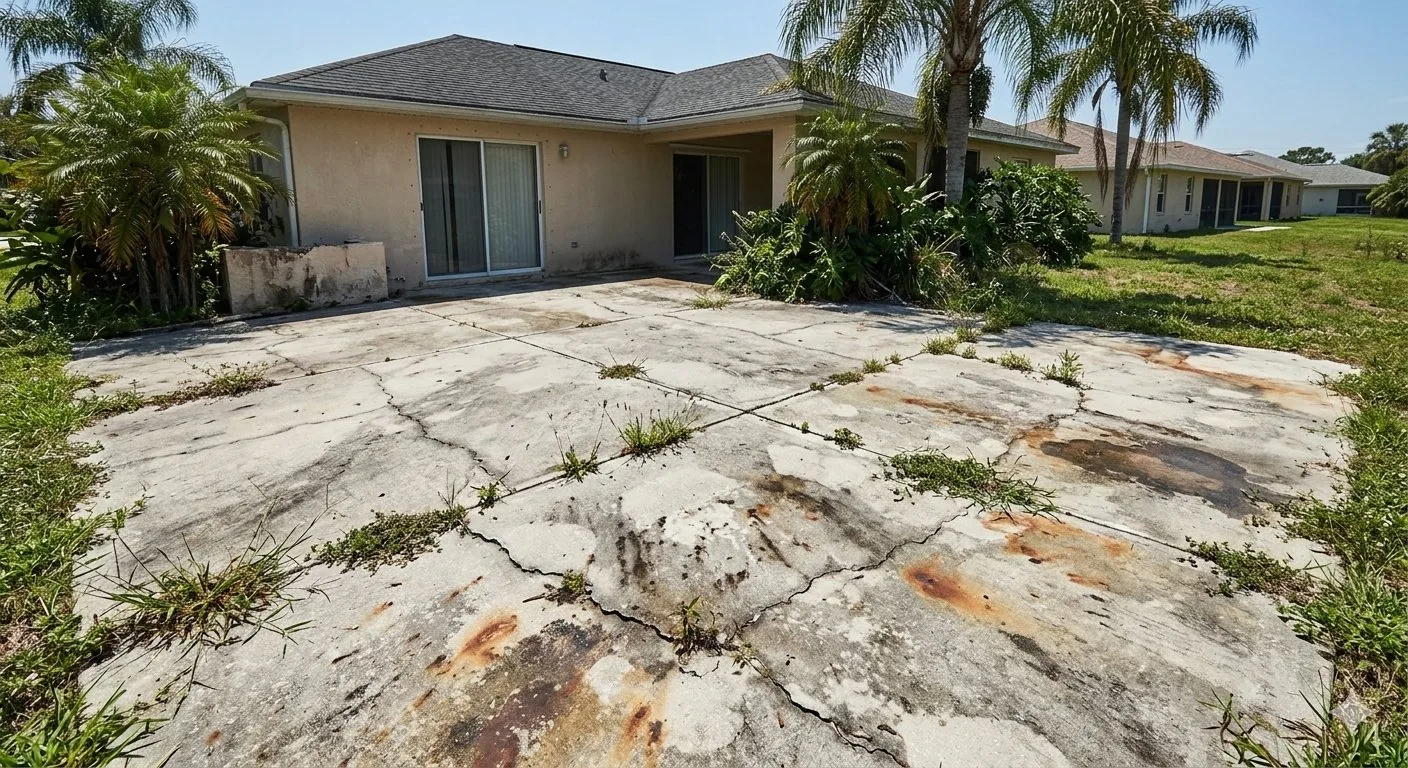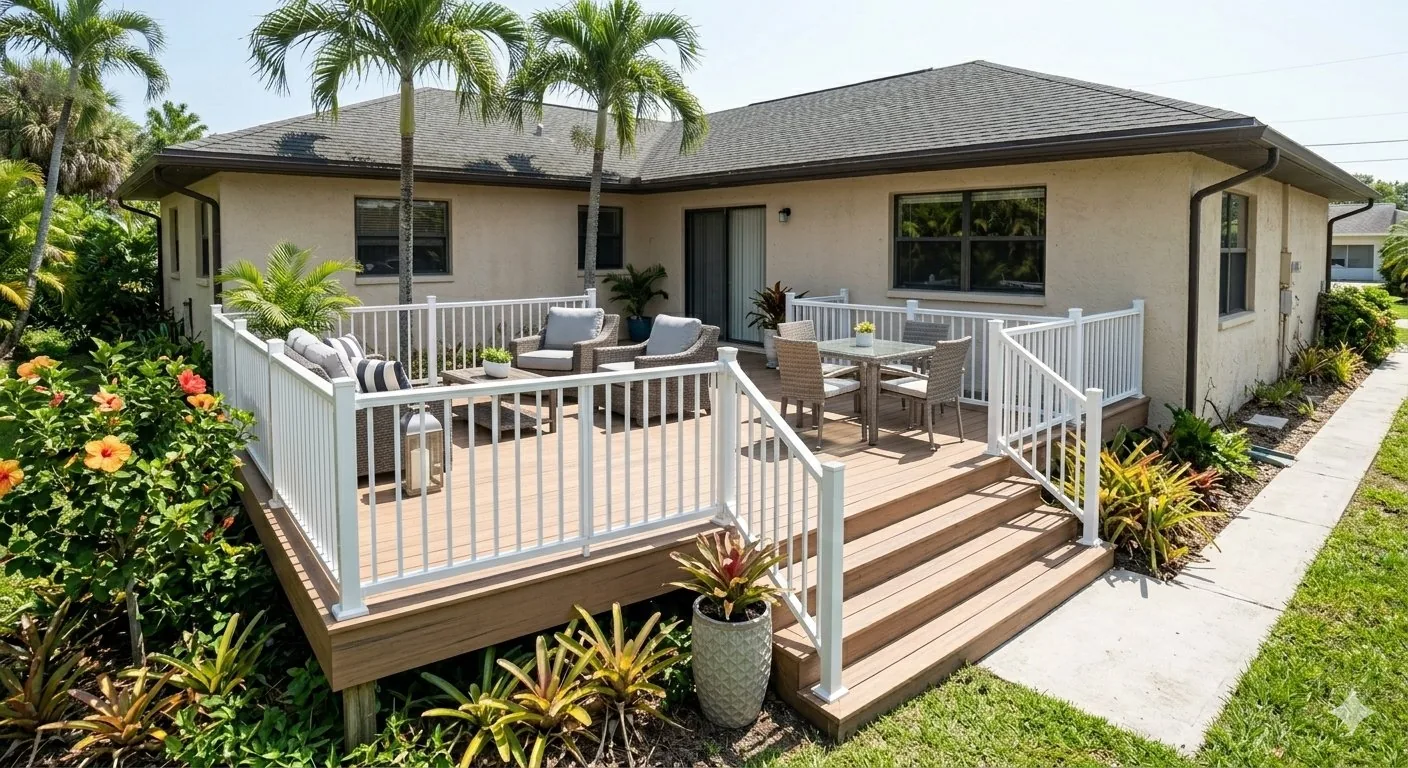
Florida is one of the toughest environments in the country for outdoor building materials. Relentless sun, high humidity, heavy summer rain, salt air near the coast, and year-round termite pressure mean a decking material that thrives in Ohio can fail fast in Riverview. So which decking materials actually hold up in our climate? Here is a practical ranking for Riverview homeowners.
What Florida Demands From a Deck
Before comparing materials, it helps to understand what they are up against here. A Riverview deck has to resist UV fading from intense sun, swelling and rot from humidity and rain, mold and mildew growth, insect damage from termites and other pests, and — near the water — corrosion from salt air. The best materials check all of those boxes while still looking good and staying comfortable underfoot.
1. Capped Composite — The All-Around Winner
Capped composite decking (brands like Trex and TimberTech) is our most-recommended material for Florida, and it is what we install most often. The wood-plastic core is wrapped in a protective polymer shell that resists moisture, mold, fading, staining, and insects. It never needs sealing or staining, stays cooler than older composites, and typically carries a 25-year warranty. For the vast majority of Riverview-area backyards and pool decks, it is the best balance of durability, looks, and low maintenance.
2. PVC Decking — Best for Pure Moisture Resistance
Cellular PVC decking contains no wood at all, which makes it essentially impervious to moisture and rot. It is lightweight, insect-proof, and a strong candidate for waterfront and dock applications where boards are constantly exposed to splashing and humidity. It can cost as much as or more than premium composite, and some homeowners feel it looks slightly less natural, but for the wettest locations it is hard to beat.
3. Tropical Hardwoods — Premium Natural Beauty
Dense tropical hardwoods like ipe and cumaru are naturally resistant to rot and insects and are gorgeous when finished. Ipe in particular is so dense it resists decay for decades. The trade-offs are cost — these are premium materials — and maintenance, since they need periodic oiling to keep their rich color rather than weathering to gray. For homeowners who want real wood that can survive Florida, hardwood is the top natural option and a frequent choice for high-end wood decks.
4. Pressure-Treated Wood — Budget-Friendly With Upkeep
Pressure-treated southern yellow pine is the most affordable decking material and remains popular for good reason: it gets you a real wood deck at the lowest price. The catch is maintenance. In Florida's climate it needs sealing every year or two and is more prone to warping, splintering, and eventual rot than the options above. With diligent care and quality corrosion-resistant fasteners, it can serve well for years. See how it stacks up in our composite versus wood comparison.
5. Pavers and Travertine — For Pool Surrounds
Technically not "decking" in the board sense, but travertine and concrete pavers deserve a mention because they are excellent around pools. Travertine in particular stays remarkably cool underfoot in full sun and offers natural slip resistance, which is exactly what you want in a poolside surface. We frequently combine paver or travertine surrounds with composite decking for the best of both worlds.
Materials to Approach With Caution
- Untreated softwoods: Will rot quickly in Florida humidity. Avoid for structural or surface use outdoors.
- First-generation uncapped composite: Older composite without a protective cap can absorb moisture and grow mold. Modern capped boards solve this.
- Low-grade fasteners: Not a decking material, but worth repeating — cheap fasteners rust and stain in our climate. Always insist on stainless or hot-dipped galvanized hardware.
The Fastener Factor
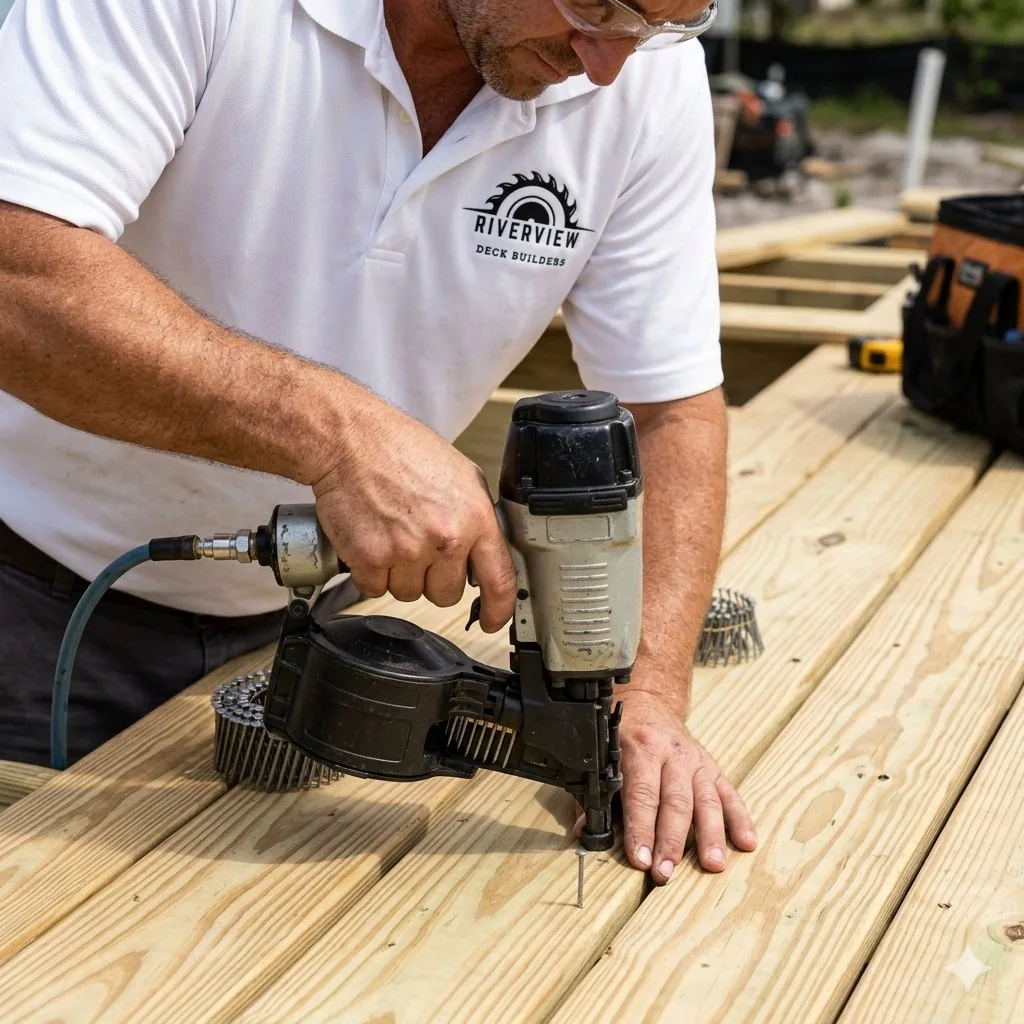
No matter which surface you choose, the hardware holding it together matters enormously in Florida. Humidity and salt air corrode ordinary fasteners, leading to rust streaks and, worse, structural weakening over time. On every build we use corrosion-resistant fasteners and properly flashed connections — the unglamorous details that determine whether a deck lasts five years or twenty-five.
Color, Finish, and How They Hold Up
Material is only part of the decision — color and finish affect both looks and performance in Florida's intense sun. Lighter-colored decking absorbs less heat and stays cooler underfoot, a meaningful difference on a deck in full afternoon sun. Quality capped composites are engineered with strong UV resistance so their color holds for decades, while cheaper materials can fade unevenly. With natural wood, expect color to shift over time unless you commit to regular oiling or staining; many homeowners eventually let hardwood weather to a silvery gray, which is a look in its own right.
Texture matters too. Wood-grain embossing on composite not only looks convincing but adds slip resistance, which is valuable around pools and in our rainy season. When you are choosing a board, look at it wet and in direct sun, not just in the showroom — that is how you will actually experience it.
Matching Material to Where You Live
Your specific location in the Riverview area should influence the choice. Homes right on a canal or the bay deal with constant moisture and salt, so PVC, capped composite, or marine-grade hardwood with stainless fasteners is the smart move. Inland homes have more flexibility and can lean toward composite or even well-maintained pressure-treated wood. Heavily shaded yards hold moisture longer and grow mold faster, which again favors the rot-proof options. There is no single "best" material for every Florida home — there is a best material for your home, your budget, and your spot in Hillsborough County.
Our Recommendation
For most Riverview homeowners, capped composite is the best all-around decking material: durable, low-maintenance, comfortable, and warrantied for decades. Near the water, PVC or marine-grade hardwood paired with stainless fasteners is the move. On a tight budget, properly maintained pressure-treated wood still works. And around pools, consider travertine or pavers for that cool, slip-resistant surface.
The best material for your project depends on your budget, your location in Hillsborough County, and how you plan to use the space. We will walk you through samples and honest recommendations during a free consultation. Request your free quote to get started.